


Subscribe To Get Information, Latest News And Other Interesting Events!


Important Links
Get In Touch
Ariston Publication
3167 Riverview Place
Columbus, OH 43202
United States of America
Copyright © 2026 Ariston Publications. All Rights Reserved.
Loading Your Library
Preparing your reading experience...
Loading content...
Ariston Publication
3167 Riverview Place
Columbus, OH 43202
United States of America

Roshana K. Hushare, R. B. Gade, M. T. Nikam
Roshana K. Hushare *
R. B. Gade
M. T. Nikam
Department of Zoology, Shri Shivaji Science and Arts College Chikhli, Buldhana 443201, India.
* Author to whom correspondence should be addressed: roshanahushare@gmail.com (Roshan K. Hushare)
Butterflies, as vital components of biodiversity, serve as sensitive bioindicators of ecosystem health due to their rapid response to environmental changes. Their presence and abundance reflect habitat quality, climatic conditions, and floral diversity, making them essential for ecological monitoring. This study investigates the seasonal abundance and diversity of butterflies in Chikhli, Buldhana District, Maharashtra, India, from June to September 2022. A total of 17 butterfly species belonging to 14 genera and five families were recorded. The family Nymphalidae dominated the survey with seven species (41%), followed by Pieridae (4 species, 23%), Papilionidae (3 species, 18%), Lycaenidae (2 species, 12%), and Hesperiidae (1 species, 6%). The highest butterfly diversity was observed in grasslands, open scrub jungles, and agricultural peripheries, with peak abundance during the monsoon months (July–September). The seasonal variation in butterfly populations was closely linked to the availability of host plants, nectar sources, and favorable climatic conditions. The study employed the Pollard walk method for field surveys, with species identification based on morphological characteristics and photographic documentation. Findings highlight the critical role of monsoon vegetation in sustaining butterfly populations and emphasize the need for habitat conservation to mitigate anthropogenic threats such as urbanization and agricultural intensification. This research serves as a baseline for future studies on butterfly ecology in the region and underscores the importance of preserving floral diversity to support pollinator communities.
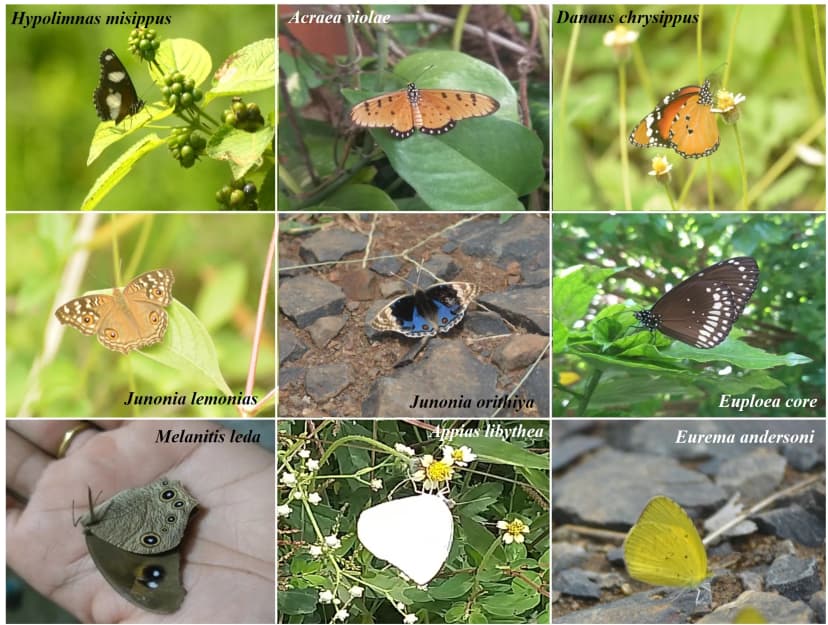
This study provides valuable insights into the seasonal patterns of butterfly diversity and abundance in Chikhli, Buldhana District, Maharashtra. It underscores the importance of butterflies as bioindicators of ecosystem health and highlights the role of monsoon vegetation in supporting butterfly populations. The findings advocate for habitat conservation, particularly in grasslands and agricultural peripheries, to mitigate the impacts of urbanization and agricultural intensification, ensuring the long-term sustainability of these vital pollinator communities.
The study investigated the diversity and seasonal abundance of butterflies in Chikhli, Buldhana District, from June to September 2022. Seventeen species across five families were recorded, with the Nymphalidae family dominating. Highest diversity was found in grasslands, scrub jungles, and agricultural peripheries, peaking during the monsoon. Seasonal variations in butterfly populations were linked to host plant availability and climatic conditions. The study emphasizes the need for habitat conservation to protect butterfly populations and floral diversity.
Article type: Research Article
Submitted: 1 March 2025
Revised: 20 April 2025
Accepted: 28 April 2025
First published: 3 March 2025
DOI: https://doi.org/10.69626/bba.2025.0096
Volume: 2
Issue: 2
Pages: 96-104
Citation: BioMed and BioSci Advances 2(2), 96-104 (2025)