


Subscribe To Get Information, Latest News And Other Interesting Events!



Important Links
Get In Touch
Ariston Publication
3167 Riverview Place
Columbus, OH 43202
United States of America
Copyright © 2026 Ariston Publications. All Rights Reserved.
Loading Your Library
Preparing your reading experience...
Loading content...
Ariston Publication
3167 Riverview Place
Columbus, OH 43202
United States of America
Mat Both Dol, Delelegn Woyessa, Shiferaw Demissie, M. Sadre Alam Fakhri
Mat Both Dol1
Delelegn Woyessa1
Shiferaw Demissie1
M. Sadre Alam Fakhri2, *
1 Department of Biology (Applied Microbiology), College of Natural Science, Jimma University, Ethiopia.
2 Department of Biology, Gambella University, P. O. Box: 126, Gambella, Ethiopia.
* Author to whom correspondence should be addressed: fakhrimsa@gmail.com(M. Sadre Alam Fakhri)
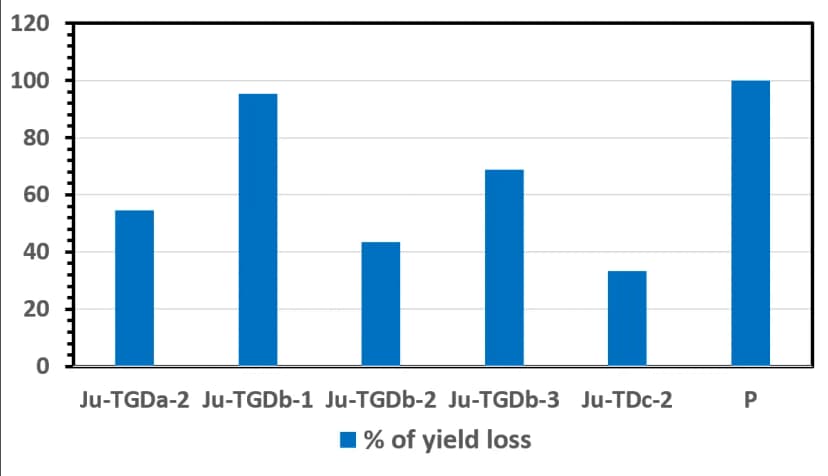
Biological control presents a sustainable alternative to chemical pesticides by utilizing living organisms or their byproducts to suppress plant pathogens. This study investigated the efficacy of several native Ethiopian isolates of the fungus Trichoderma for controlling late blight disease, caused by Phytophthora infestans, and for promoting growth in tomato plants (Solanum lycopersicum L.) under greenhouse conditions. A susceptible tomato cultivar, Moneymaker, was used in a pot experiment designed to test various Trirchoderma isolates, both individually and in combination with the pathogen. Key parameters including disease severity, plant growth metrics (shoot length, root length, fresh and dry biomass), and final fruit yield were meticulously recorded and analyzed. The results demonstrated a significant reduction in late blight severity in plants treated with the isolates Ju-TDc-2, Ju-TGDa-2, and Ju-TGDb-3, with disease indices as low as 8.8% compared to 19.2% in the pathogen-only control. Furthermore, these same isolates consistently enhanced plant growth, with shoot lengths reaching up to 89.67 cm and substantial increases in fresh weight and fruit yield. The study concludes that these specific Trichoderma isolates are highly promising biocontrol agents that effectively mitigate late blight damage while concurrently functioning as plant growth promoters. Their development into commercial bioformulations could offer Ethiopian smallholder farmers a viable, eco-friendly strategy for integrated disease management.
The study provides a sustainable alternative to chemical pesticides for Ethiopian tomato farmers. Identifying effective native Trirchoderma isolates is crucial for developing locally adapted, eco-friendly bioformulations. This can reduce crop losses, increase yields, lower production costs, and minimize environmental and health risks associated with fungicide overuse, contributing to food security and sustainable agriculture.
This study evaluated native Ethiopian Trichoderma isolates for biocontrol of tomato late blight (Phytophthora infestans) and growth enhancement. Under greenhouse conditions, isolates Ju-TDc-2, Ju-TGDa-2, and Ju-TGDb-3 significantly reduced disease severity and improved plant growth parameters (shoot length, biomass) and marketable yield compared to pathogen-infected controls, demonstrating their dual function as effective biocontrol agents and plant growth promoters.
Article type: Research Article
Submitted: 8 February 2025
Revised: 20 April 2025
Accepted: 25 June 2025
First published: 13 July 2025
DOI: https://doi.org/10.69626/bba.2025.0169
Volume: 2
Issue: 3
Pages: 169-177
Citation: BioMed and BioSci Advances 2(3), 169-177 (2025)
Dol, M. B., Woyessa, D., Demissie, S., Fakhri, M. S. A. 2025. Evaluating Native Trichoderma Isolates for the Biocontrol of Late Blight (Phytophthora infestans) and Growth Enhancement in Tomato (Solanum lycopersicum L.). BioMed and BioSci Advances 2(3), pp. 169-177; https://doi.org/10.69626/bba.2025.0169
Number of downloads: 10
Number of views: 67