


Subscribe To Get Information, Latest News And Other Interesting Events!



Important Links
Get In Touch
Ariston Publication
3167 Riverview Place
Columbus, OH 43202
United States of America
Copyright © 2026 Ariston Publications. All Rights Reserved.
Loading Your Library
Preparing your reading experience...
Loading content...
Ariston Publication
3167 Riverview Place
Columbus, OH 43202
United States of America
Yuyao Xie, Hongli Xu, Tingshu Li, Ji Sun, Yiling Li
1 The First Hospital of China Medical University, No.155 North Nanjing Street, Heping District, Shenyang 110001, Liaoning, China.
2 Department of Natural Products Chemistry, School of Pharmacy, China Medical University, No.77 Puhe Road, Shenyang North New Area, Shenyang 110122, Liaoning, China.
# Both Authors contributed equally to this work.
* Author to whom correspondence should be addressed: lyl-72@163.com (Yiling Li); sunji0411@163.com (Ji Sun)
Metabolic dysfunction-associated fatty liver disease (MAFLD) represents a growing global health challenge, characterized by hepatic steatosis, inflammation, and fibrosis in the setting of metabolic syndrome. Its pathogenesis is driven by insulin resistance, disordered lipid metabolism, and oxidative stress, often progressing to steatohepatitis (MASH) and cirrhosis. Silymarin, a flavonoid-rich extract derived from Silybum marianum, has attracted considerable interest for its multi-target hepatoprotective properties. This review summarizes the pharmacological mechanisms by which silymarin exerts antioxidant, anti-inflammatory, anti-fibrotic, and lipid-modulating effects, thereby addressing key pathways in MAFLD development. Clinical evidence indicates that silymarin, particularly in bioavailable complex formulations, significantly improves liver enzyme profiles, lipid parameters, and imaging findings in MAFLD patients. Combination regimens with agents such as vitamin E or statins appear to enhance therapeutic efficacy. Despite promising data, broader clinical adoption requires further large-scale, rigorous trials to standardize dosing, confirm long-term benefits, and validate safety in heterogeneous patient populations. Overall, silymarin emerges as a promising adjunctive natural compound in the integrated management of MAFLD.
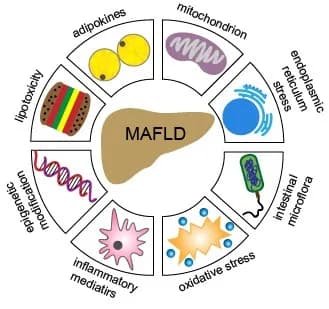
This review highlights the therapeutic potential of silymarin in managing metabolic dysfunction–associated fatty liver disease by integrating mechanistic insights with current clinical evidence. By systematically summarizing its antioxidant, anti-inflammatory, anti-fibrotic, and metabolic regulatory effects, the article clarifies how silymarin targets key pathogenic pathways of MAFLD. Importantly, it underscores the value of bioavailable formulations and combination therapies, providing a scientific rationale for future clinical translation and well-designed trials.
This review comprehensively examines the role of silymarin in the management of MAFLD. It outlines the epidemiology and pathogenesis of MAFLD, details the pharmacological composition and multi-target mechanisms of silymarin, and summarizes available clinical evidence. The article highlights silymarin’s antioxidant, anti-inflammatory, anti-fibrotic, and metabolic regulatory effects, emphasizing the therapeutic promise of bioavailable formulations and combination strategies in MAFLD treatment.
Article type: Review
Submitted: 22 August 2025
Revised: 18 October 2025
Accepted: 27 November 2025
First published: 11 December 2025
DOI: https://doi.org/10.69626/bba.2026.0001
Volume: 3
Issue: 01
Pages: 01-15
Citation: BioMed and BioSci Advances 3(1), 01-15 (2026)
Xie, Y., Xu, H., Li, T., Li, Y. 2026. Mechanistic Insights and Clinical Evidence for Silymarin in the Management of Metabolic Dysfunction–Associated Fatty Liver Disease. BioMed and BioSci Advances 3(1), pp. 01-15; https://doi.org/10.69626/bba.2026.0001
Number of downloads: 18
Number of views: 162