


Subscribe To Get Information, Latest News And Other Interesting Events!



Important Links
Get In Touch
Ariston Publication
3167 Riverview Place
Columbus, OH 43202
United States of America
Copyright © 2026 Ariston Publications. All Rights Reserved.
Loading Your Library
Preparing your reading experience...
Loading content...
Ariston Publication
3167 Riverview Place
Columbus, OH 43202
United States of America
S. Stephen Rajkumar Inbanathan, Poornima Jeyasekaran, S. Irfana Parveen, S. Shri Tharani Priya, K. Sneka
S. Stephen Rajkumar Inbanathan*
Poornima Jeyasekaran
S. Irfana Parveen
S. Shri Tharani Priya
K. Sneka
Post Graduate and Research Department of Physics, The American College, Madurai, 625002 Tamil Nadu, India
*Authors to whom correspondence should be addressed: ssrinbanathan@gmail.com (S. Stephen Rajkumar Inbanathan)
This study investigates the green synthesis of silver nanoparticles (AgNPs) using Cardiospermum halicacabumleaf extract, which acts as both a reducing and stabilizing agent. The biosynthesis approach is eco-friendly and leverages the phytochemical constituents of Cardiospermum halicacabum. Characterization of the synthesized AgNPs was performed using scanning electron microscopy (SEM), X-ray diffraction (XRD), and Fourier-transform infrared spectroscopy (FTIR), confirming the formation of nanoparticles with desired properties. SEM analysis revealed the morphology and size distribution of the AgNPs, while XRD provided insights into their crystalline nature, and FTIR identified functional groups involved in the reduction and stabilization processes. Despite the successful synthesis of AgNPs, antimicrobial assays indicated that these nanoparticles did not exhibit significant antibacterial activity against tested microorganisms such as Escherichia coli and Staphylococcus aureus. The results suggest that the synthesized AgNPs require further optimization to enhance their antimicrobial efficacy. This study underscores the potential of Cardiospermum halicacabumin green nanoparticle synthesis and highlights the need for continued research to understand the factors influencing the antimicrobial properties of biosynthesized AgNPs, aiming to improve their effectiveness for clinical and industrial applications.
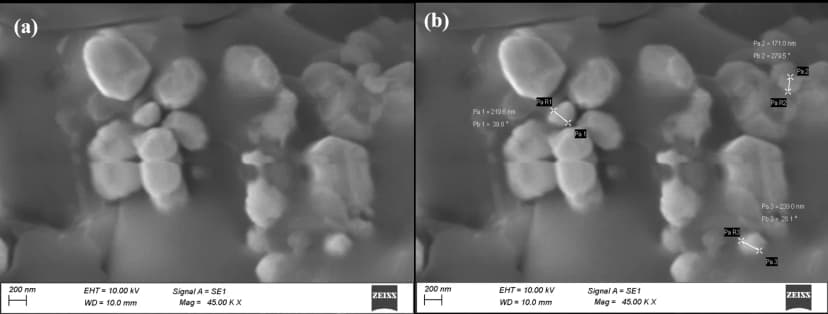
The study investigates silver nanoparticles synthesized using Cardiospermum halicacabum leaf extract. Characterization techniques confirmed the successful formation of nanoparticles. Initial antimicrobial tests against E. coli and S. aureus showed limited efficacy, suggesting the need for optimization. The research underscores the potential of these green-synthesized nanoparticles in various applications.
Article type: Research Article
Submitted: 15 March 2024
Revised: 26 April 2024
Accepted: 17 May 2024
First published: 1 June 2024
DOI: https://doi.org/10.69626/csa.2024.0096
Volume: 1
Issue: 2
Pages: 96-103
Citation: ChemSci Advances 1(2), 96-103 (2024)
Inbanathan, S. S. R., Jeyasekaran, P., Parveen, S. I., Priya, S. S. T., Sneka, K. 2024, Synthesis and Antibacterial Properties of Silver Nanoparticles Derived from Cardiospermum halicacabum Leaves. ChemSci Advances 1(2), pp. 96-103; https://doi.org/10.69626/csa.2024.0096
Number of downloads: 9
Number of views: 50