


Subscribe To Get Information, Latest News And Other Interesting Events!


Important Links
Get In Touch
Ariston Publication
3167 Riverview Place
Columbus, OH 43202
United States of America
Copyright © 2026 Ariston Publications. All Rights Reserved.
Loading Your Library
Preparing your reading experience...
Loading content...
Ariston Publication
3167 Riverview Place
Columbus, OH 43202
United States of America
Raghul Ramachandran, Jeyaprakash Jenson Samraj, Bernaurdshaw Neppolian
Raghul Ramachandran1
Jeyaprakash Jenson Samraj 1,2
Bernaurdshaw Neppolian 1,*
1Energy and Environmental Remediation Laboratory, Department of Chemistry, Faculty of Engineering and Technology, SRM Institute of Science and Technology, Kattankulathur, Chengalpattu - 603 203, Tamil Nadu, India. E-mail: neppolib@srmist.edu.in
2 Department of Applied Chemistry, Osaka Metropolitan University, 1-1 Gakuen-cho, Sakai, Osaka 599-8531, Japan
* Author to whom correspondence should be addressed:
neppolib@srmist.edu.in (Bernaurdshaw Neppolian)
Emerging solar cell technologies are attracting increasing attention because of their potential for lightweight, flexible, and low-cost solar energy conversion. However, their environmental performance depends not only on how efficiently they are run, but also on the materials, chemicals, and manufacturing processes used in their life cycle. Technologies such as perovskite solar cells (PSCs), dye-sensitized solar cells (DSSCs), organic photovoltaics (OPVs), and quantum dot solar cells (QDSCs) have many advantages, but their development is accompanied by concerns surrounding the use of hazardous materials such as lead, cadmium, and selenium-containing compounds, metal-based materials, and organic solvents. In addition, the fabrication of substrates, electrodes, charge transport layers, and other device elements can be a major contributor to resource consumption and environmental impacts. This review focuses on the materials and chemicals used in emerging solar cells and their potential impact on human health and the environment. It discusses the role of life cycle assessment (LCA) and energy payback time for assessing their environmental performance and possible contamination pathways during production, use, and end-of-life management. Considered approaches include green chemistry, safer selection of materials, waste minimization, solvent recovery, improved encapsulation, and reuse and recycling. The review points to the need for more comparable LCA studies, reliable toxicity and leaching assessments, and effective end-of-life management strategies. To summarize, the development of sustainable solar cell technologies is a balancing act between device performance, material safety, manufacturing requirements, and environmental responsibility over the entire life cycle.
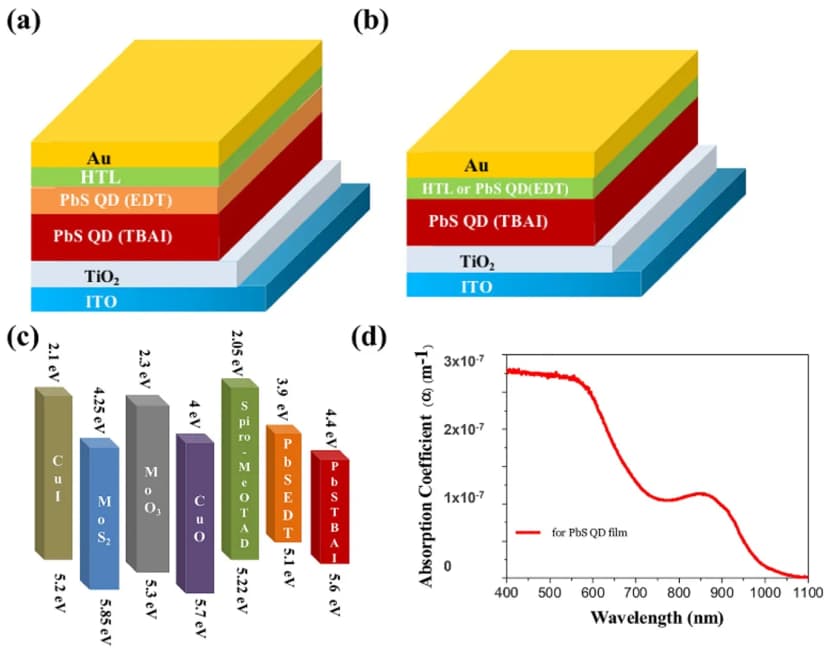
This review highlights the importance of evaluating emerging solar cell technologies through a comprehensive life-cycle perspective that considers material safety, environmental impacts, and manufacturing requirements alongside energy conversion efficiency. By examining potentially hazardous substances, chemical processing, and contamination pathways across different solar technologies, it identifies critical sustainability challenges. The discussion of green chemistry, safer material selection, recycling, and waste reduction provides practical directions for minimizing environmental and occupational risks, supporting the development of cleaner, safer, and more sustainable photovoltaic technologies.
This review examines the environmental impacts of potentially hazardous materials and chemicals used in perovskite, dye-sensitized, organic, and quantum dot solar cells. It discusses risks associated with lead, cadmium, selenium-containing compounds, metal-based materials, and fabrication solvents throughout production, operation, and disposal. Life-cycle assessment and energy payback time are considered for evaluating environmental performance. The review highlights safer materials, green chemistry, solvent recovery, encapsulation, and recycling, while identifying research needs in toxicity assessment, leaching studies, comparable LCAs, and end-of-life management.
Article type: Review
Submitted: 7 May 2026
Revised: 2 July 2026
Accepted: 19 July 2026
First published: 8 August 2026
DOI: https://doi.org/10.69626/csa.2026.0133
Volume: 3
Issue: 03
Pages: 133-150
Citation: ChemSci Advances 3(3), 133-150 (2026)
Ramachandran R., J.J. Samraj J. J., Neppolian B. 2026. Environmental Impacts of Potentially Hazardous Materials and Chemicals in Emerging Solar Cells: A Life–Cycle Perspective. ChemSci Advances 3(3), pp. 133-150; https://doi.org/10.69626/csa.2026.0133
Number of downloads: 0
Number of views: 3