


Subscribe To Get Information, Latest News And Other Interesting Events!



Important Links
Get In Touch
Ariston Publication
3167 Riverview Place
Columbus, OH 43202
United States of America
Copyright © 2026 Ariston Publications. All Rights Reserved.
Loading Your Library
Preparing your reading experience...
Loading content...
Ariston Publication
3167 Riverview Place
Columbus, OH 43202
United States of America
Aiswarya M., P. Predeep
Aiswarya M. 1
P. Predeep 2,*
1 Department of Physics, National Institute of Technology Calicut, Kozhikode, India
2 School of Nanoscience and Nanotechnology, Mahatma Gandhi University, Kottayam 686560, Kerala, India
* Author to whom correspondence should be addressed: aiswaryasan2@gmail.com (Aiswarya M.)
Organic-inorganic hybrid perovskites have emerged as promising materials for high-performance optoelectronic devices due to their superior properties. Crystal quality plays a pivotal role in optimizing their performance. This study investigates the incorporation of Capsaicin (C18H27NO3), a natural organic compound, as a dopant in methylammonium lead iodide (MAPbI3) single crystals, synthesized through the inverse temperature crystallization method. Vibrational spectroscopic analyses were performed to understand the structural and functional impact of Capsaicin on crystal growth, nucleation, and quality. Raman spectroscopy and Fourier-transform infrared spectroscopy (FTIR) reveal significant enhancements in the structural stability and purity of MAPbI3 crystals upon doping with Capsaicin. Powder X-ray diffraction (XRD) confirmed the improved phase purity, with impurity peaks observed in pristine MAPbI3 eliminated in the doped crystals. The addition of Capsaicin was found to modulate the nucleation rate and enhance the growth rate, leading to larger, and high-quality crystals with improved stability. Vibrational spectroscopic studies further highlighted reduced water absorption and enhanced molecular interactions within the doped crystals. This work underscores the potential of Capsaicin as an effective organic ligand to regulate the crystallographic properties of hybrid perovskites. The findings pave the way for utilizing Capsaicin and similar organic additives in engineering optoelectronic materials with enhanced stability and efficiency. Future studies could explore the broader applications of Capsaicin-doped perovskites, particularly in photovoltaics and photodetectors, further advancing the field of hybrid perovskite research.
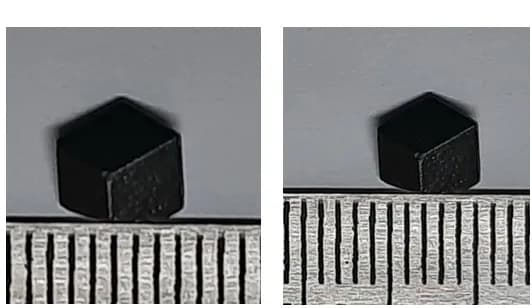
Capsaicin-doped MAPbI₃ single crystals were synthesized using inverse temperature crystallization. Vibrational spectroscopy and XRD confirmed enhanced phase purity, reduced defects, and improved structural stability. Capsaicin modulated nucleation rates, promoting larger, high-quality crystals with reduced water absorption and enhanced molecular interactions. These findings highlight the promise of Capsaicin and similar organic dopants for advanced optoelectronic applications.
Article type: Research Article
Submitted: 20 January 2024
Revised: 17 February 2024
Accepted: 19 February 2024
First published: 1 March 2024
DOI: https://doi.org/10.69626/eea.2024.0033
Volume: 1
Issue: 1
Pages: 33-40
Citation: Energy & Environment Advances 1(1), 33-40 (2024)
Aiswarya M. and Predeep , P. 2024. Enhanced Electrical Conductivity and Photocatalytic Activity of Iron–Doped CuAlO2 Nanoparticles for Sustainable Energy Applications. Energy & Environment Advances 1(1), pp. 33-40; https://doi.org/10.69626/eea.2024.0033.
Number of downloads: 5
Number of views: 31