


Subscribe To Get Information, Latest News And Other Interesting Events!


Important Links
Get In Touch
Ariston Publication
3167 Riverview Place
Columbus, OH 43202
United States of America
Copyright © 2026 Ariston Publications. All Rights Reserved.
Loading Your Library
Preparing your reading experience...
Loading content...
Ariston Publication
3167 Riverview Place
Columbus, OH 43202
United States of America

Kailas K. Tehare, Vankatesh Gopula, Vikas Mogadpalli, Sambhaji Bhande, Santosh Damkondwar
Kailas K. Tehare1,*
Vankatesh Gopula2
Vikas Mogadpalli1
Sambhaji Bhande3
Santosh Damkondwar4
1 Department of Engineering Sciences, Ajeenkya D. Y. Patil School of Engineering, Pune- 412105, Maharashtra, India.
2 Department of Chemistry, Anandibai Raorane Arts, Commerce and Science College, Vaibhavwadi, Dist. Sindhudurg- 416810, Maharashtra, India.
3 Baburaoji Aaskar Mahavidyalaya, Kaij, Dist. Beed- 431123, Maharashtra, India.
4 Department of Engineering Chemistry, D. Y. Patil college of Engineering, Akurdi, Pune- 412101, Maharashtra, India.
* Author to whom correspondence should be addressed: ktehare@gmail.com(Kailas K. Tehare)
Titanium dioxide (TiO₂) nanostructured electrodes were synthesized using a simple and cost-effective chemical bath deposition (CBD) method by varying the concentration of titanium tetrachloride (TiCl₄). The structural and morphological properties of the deposited TiO₂ films were systematically characterized using X-ray diffraction (XRD) and field-emission scanning electron microscopy (FE-SEM). XRD analysis confirmed the formation of a monoclinic rutile phase of TiO₂ (JCPDS Card No. 46-1238), while FE-SEM images revealed distinct morphological variations—ranging from compact structures to nanorice and flower-like architectures—depending on the TiCl₄ concentration. Energy-dispersive X-ray spectroscopy (EDX) confirmed the stoichiometric composition of TiO₂, with Ti and O present in a near-ideal atomic ratio. Optical absorption studies using UV-Vis spectroscopy demonstrated enhanced light absorption after sensitization with N719 dye, particularly in the visible region (λ ≈ 550 nm). The photoelectrochemical performance of dye-sensitized solar cells (DSSCs) fabricated with these TiO₂ electrodes was evaluated under simulated AM 1.5G illumination (100 mW/cm²). The optimal TiCl₄ concentration (0.15 M) yielded a power conversion efficiency (PCE) of 1.62%, with an open-circuit voltage (Voc) of 0.75 V, short-circuit current density (Jsc) of 4.14 mA/cm², and fill factor (FF) of 0.52. Electrochemical impedance spectroscopy (EIS) and incident photon-to-electron conversion efficiency (IPCE) measurements further validated the improved charge transport and photon absorption characteristics. This study highlights the critical role of TiCl₄ concentration in tailoring TiO₂ nanostructures for efficient DSSC applications, providing insights into morphology-dependent photovoltaic performance.
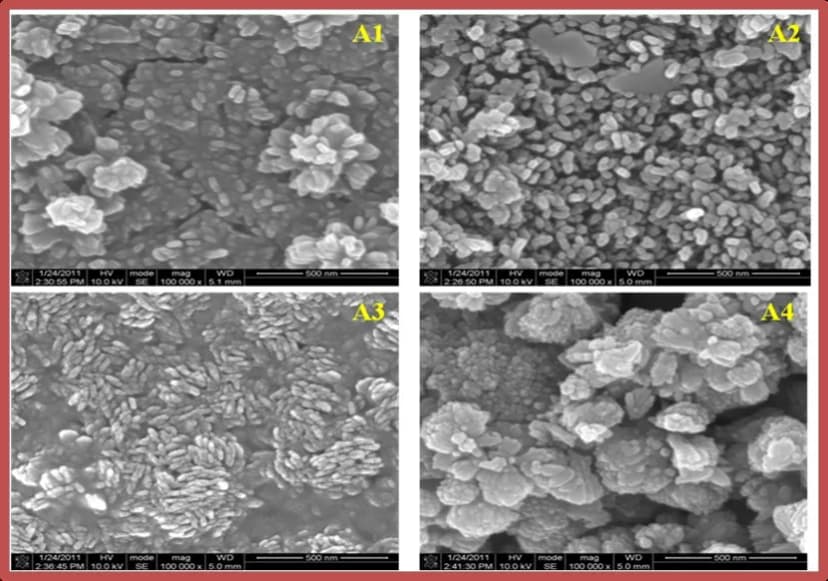
The study synthesized TiO₂ nanostructures via CBD by varying TiCl₄ concentration (0.05–0.2 M). XRD confirmed rutile phase formation, while FE-SEM revealed morphology evolution from compact to nanorice structures. Optimal 0.15 M TiCl₄ yielded 1.62% PCE (Voc: 0.75 V, Jsc: 4.14 mA/cm²) post N719 dye sensitization, attributed to enhanced light absorption and charge transport. EIS and IPCE validated performance. The work highlights TiCl₄'s role in tuning TiO₂ properties for efficient DSSCs, guiding future optimizations in nanostructured photoelectrodes.
Article type: Research Article
Submitted: 3 January 2025
Revised: 16 February 2025
Accepted: 13 March 2025
First published: 26 March 2025
DOI: https://doi.org/10.69626/eea.2025.0085
Volume: 2
Issue: 2
Pages: 85-94
Citation: Energy & Environment Advances 2(2), 85-94 (2025)
Tehare, K.K., Gopula, V., Mogadpalli, V., Bhande, S. and Damkondwar, S. 2025. Optimization of TiO₂ Electrodes via TiCl₄ Concentration Tuning for Enhanced Dye–Sensitized Solar Cell Performance. Energy & Environment Advances 2(2), pp. 85-94; https://doi.org/10.69626/eea.2025.0085.
Number of downloads: 19
Number of views: 108