


Subscribe To Get Information, Latest News And Other Interesting Events!



Important Links
Get In Touch
Ariston Publication
3167 Riverview Place
Columbus, OH 43202
United States of America
Copyright © 2026 Ariston Publications. All Rights Reserved.
Loading Your Library
Preparing your reading experience...
Loading content...
Ariston Publication
3167 Riverview Place
Columbus, OH 43202
United States of America

Gamze Erdoğdu
Gamze Erdoğdu
İnönü University, Faculty of Arts & Sciences, Department of Chemistry, Malatya-44280, Turkey
* Author to whom correspondence should be addressed: gamze.erdogdu@inonu.edu.tr(Gamze Erdoğdu)
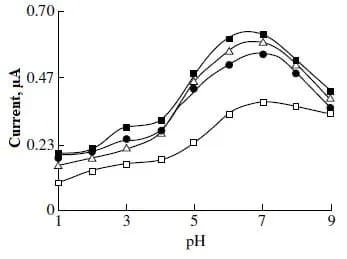
In the present work, we discuss the modification of a gold electrode with p-methoxyphenol and its application as a sensor for acetaminophen (ACP) in a phosphate buffer solution (pH = 7.4). The modified electrode was subsequently employed to determine acetaminophen in the presence of ascorbic acid (AA) using differential pulse voltammetry (DPV). The peak positions and relative sensitivity of ACP/AA were influenced by the potential window used during polymerization. For polymerization between 0 and 1.0 V, the peak potentials recorded in the phosphate buffer solution (pH = 7.4) were 488 mV for ACP and 280 mV vs. Ag/AgCl for AA. Furthermore, the effects of pH and electrolyte type on the linearity range and detection limit were investigated. The high selectivity and sensitivity for ACP were attributed to charge discrimination and analyte accumulation. The detection limit for the 3σ-test was determined to be 0.2 nM. This study highlights the potential of the modified gold electrode for selective and sensitive detection of acetaminophen, even in the presence of interfering substances such as ascorbic acid. The optimization of polymerization conditions and the comprehensive analysis of pH and electrolyte effects contribute to the electrode's superior performance.
The research details the modification of a gold electrode with poly(p-methoxyphenol) for acetaminophen detection amidst ascorbic acid interference using differential pulse voltammetry. Optimal polymerization conditions led to distinct peak potentials for acetaminophen and ascorbic acid, with a detection limit of 0.2 nM for acetaminophen. This modified electrode demonstrates high selectivity and sensitivity, offering significant potential for precise pharmaceutical analysis.
Article type: Research Article
Submitted: 27 March 2024
Revised: 13 May 2024
Accepted: 6 June 2024
First published: 15 July 2024
DOI: https://doi.org/10.69626/mse.2024.0179
Volume: 1
Issue: 3
Pages: 179-184
Citation: MatSci Express 1(3), 179-184 (2024)