


Subscribe To Get Information, Latest News And Other Interesting Events!


Important Links
Get In Touch
Ariston Publication
3167 Riverview Place
Columbus, OH 43202
United States of America
Copyright © 2026 Ariston Publications. All Rights Reserved.
Loading Your Library
Preparing your reading experience...
Loading content...
Ariston Publication
3167 Riverview Place
Columbus, OH 43202
United States of America
Y. Y. Dubale
Y. Y. Dubale*
Shrimant Bhaiyyasaheb Rajemane Mahavidyalaya, Mhaswad Tal. Man District Satara- 415509, Maharastra, India.
*Author to whom correspondence should be addressed:
yogeshdubale@gmail.com (Y. Dubale)
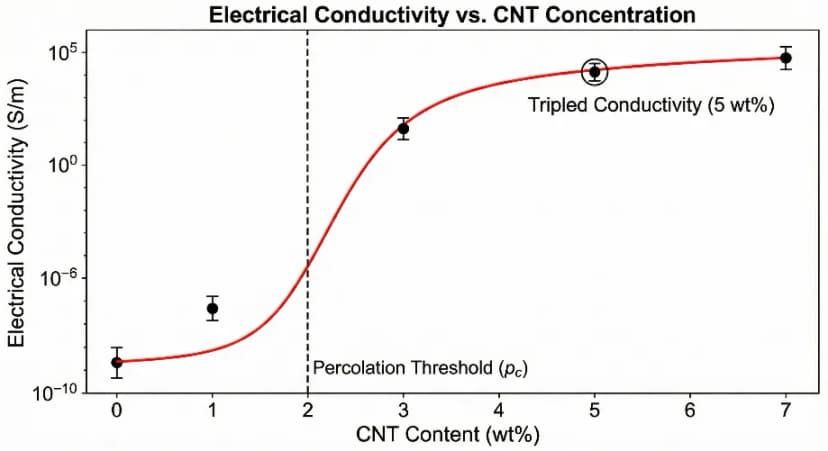
This study focuses on overcoming the inherent limitations of conventional polymers, namely, their insufficient mechanical strength and electrical conductivity, which restrict their use in demanding aerospace and automotive environments. A series of polymer composites were synthesized and evaluated using quantitative methods to measure key properties, including tensile strength, electrical conductivity, and thermal stability. The research systematically integrated conductive fillers such as carbon nanotubes and employed targeted chemical modifications to the polymer matrix. The results demonstrate significant performance gains: the tensile strength of the modified composites improved by up to 50%, while electrical conductivity tripled compared to unmodified base polymers. These advancements are critical, as they enable the development of lighter and more durable structural and electronic components. Such materials directly contribute to improved fuel efficiency and reduced greenhouse gas emissions in the transportation sector, representing a tangible step toward more sustainable engineering practices. Beyond aerospace and automotive applications, the enhanced material properties hold promise for other fields requiring reliable performance under varied conditions, such as advanced medical devices and sensor technologies. This work contributes to the fundamental understanding of polymer behavior under extreme conditions and provides a framework for designing next-generation materials tailored for high-stakes operational demands.
This study is significant as it tackles the key limitations of conventional polymers, low strength and poor electrical conductivity, by developing advanced polymer nanocomposites with enhanced properties. The improvements in mechanical strength and conductivity enable the use of lightweight materials in aerospace and automotive applications, leading to better fuel efficiency and reduced emissions. Additionally, the research supports sustainable engineering practices and opens opportunities for multifunctional materials in fields like sensors and medical devices.
The study focuses on synthesizing and evaluating polymer composites reinforced with conductive nanofillers such as carbon nanotubes. Through chemical modification and controlled processing, the composites exhibit up to 50% improvement in tensile strength and a threefold increase in electrical conductivity. The research systematically investigates the relationship between material structure and performance, demonstrating that synergistic enhancement of properties is achievable. The findings provide a framework for designing high-performance, lightweight, and multifunctional materials for advanced engineering applications.
Article type: Research Article
Submitted: 14 October 2025
Revised: 21 November 2025
Accepted: 5 December 2025
First published: 27 December 2025
DOI: https://doi.org/10.69626/sea.2025.0168
Volume: 2
Issue: 4
Pages: 168-176
Citation: SciEngg Advances 2(4), 168-176 (2025)